
VIP Spades - Card Game Online
Casualino GamesCard
4.53.39K Reviews
- Version
- 5.15.1
- Installs
- 500.00K
- Age Rating
- Everyone
Screenshots






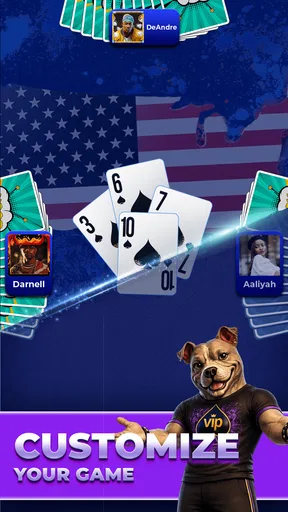

Our Review of VIP Spades - Card Game Online
 Analysis by Appyee
I usually know within a few sessions whether a card game is going to become a regular habit or disappear from my phone after the first burst of curiosity. VIP Spades - Card Game Online made a good early impression because it puts the familiar rhythm of Spades and Bridge into a social, online format without charging for the initial download. It is a card game from Casualino Games, rated at 4.5 from around 16K ratings, and it has passed 500K installs. Those figures suggest that it has found a real audience rather than relying only on a short-lived launch.
My interest in it comes from the way traditional trick-taking games reward attention without demanding the kind of constant concentration found in competitive action games. I can play a hand while taking a short break, yet I still have meaningful decisions to make. The important question is not whether the game is pleasant for an afternoon; it is whether the mix of familiar rules, online play, and repeat sessions remains worthwhile after the novelty fades.
How the first week feels
The strongest part of the early experience is recognition. If you already understand Spades, the basic appeal is immediate: watch the cards, estimate what your hand can support, and try to make decisions that help your side rather than chasing every trick. Bridge players may also appreciate the broader card-game setting, although the experience is not a replacement for a dedicated bridge table or a serious bridge-learning tool.
For someone new to these games, the first sessions are more demanding than the simple “pick a card and wait” format might suggest. A good hand is not automatically a winning hand, and a tempting trick can create problems later. I found that the most useful early habit is to pause before playing a high card and ask what information that move gives the other players. That small change makes the game feel less random and helps beginners improve without needing a complicated study routine.
The online format also changes the mood compared with playing against a computer. Human opponents make the table less predictable, and even an ordinary hand can feel different when another player takes an unexpected line. That unpredictability gives the game its first-week energy. It is also why this is better suited to people who enjoy social competition than to players who want a perfectly controlled solo puzzle.
One practical use case is a quiet evening when friends are available but nobody wants to arrange a full in-person game. A few rounds can fill the gap between other activities, and the card format is easier to return to than a long campaign. I would also consider it suitable for short breaks, provided you are comfortable stopping at a natural point rather than treating every session as something you can abandon instantly.
The free entry matters here. You can try the core experience before deciding whether it deserves regular space on your device. The age rating is Everyone, which makes the presentation broadly accessible, though younger players may still need help understanding bidding, partnerships, and the consequences of careless play. The game was released on Jul 18, 2016, so it is not a new experiment; its continued presence gives the first week a more established feel than a brand-new card app.
Learning the table instead of chasing quick wins
My advice for a new player is to treat the first several hands as practice in reading patterns, not as a test of personal skill. Keep track of which suits have already been played, notice when a player appears to be protecting a particular card, and avoid changing your plan simply because one trick went badly. Spades rewards memory and restraint more than dramatic moves.
A useful adjustment is to separate three questions: what your hand can probably win, what your partner may be trying to communicate through play, and what the opponents are trying to prevent. Beginners often focus only on the first question. That leads to overbidding or spending valuable cards too early. Once I started thinking about the other two, the game became more interesting even when I lost.
The social side can be a strength, but it can also be the first source of friction. Online card tables depend on other people being patient enough to finish a hand and respectful enough to keep the atmosphere enjoyable. If you dislike waiting for another player, or if you prefer games where every outcome depends only on your own actions, this format may feel less satisfying than a solo card app.
What keeps it useful from month to month
Long-term value comes from the underlying card decisions rather than from visual novelty. Spades has enough variation in card distribution and partnership dynamics to make repeated hands feel distinct. Even when the interface becomes familiar, the central challenge remains: estimate your chances, manage your cards, and adapt when the table develops differently from your expectation.
That kind of repetition can support a genuine habit. I can imagine opening it after work for a few hands, using it as a low-pressure way to stay connected with friends, or returning to improve one specific weakness. For example, a player who regularly loses by taking unnecessary risks can make “protect the contract first” the focus of a week. This turns casual play into a small, measurable learning loop without making the game feel like homework.
The game’s broader appeal is that it sits between a traditional card table and a quick mobile pastime. Compared with a purely offline Spades app, the online setting offers more human unpredictability and a stronger sense that each hand matters to someone else. Compared with a large multiplayer game, it is much easier to understand and less demanding on time. A dedicated bridge platform would be a better choice for players who want formal bidding systems, deep analysis, or structured improvement in Bridge specifically.
I would not call the replay value unlimited. Card games can become repetitive when the player stops learning from mistakes and simply repeats the same decisions. The way to extend the useful life is to change the goal: play more carefully, study partnership timing, or concentrate on avoiding a particular error. Without that personal challenge, the app may become background entertainment rather than a game you actively look forward to.
The developer, Casualino Games, has kept the product in active circulation through its current version, 5.15.1. That is reassuring for someone considering it as a regular app rather than a one-time download. Still, an updated version number alone does not guarantee that every player will enjoy the current experience. The real test is whether the available tables, opponents, and pacing match your preferred style of play.
Small habits that improve repeated sessions
I found three habits especially valuable for keeping the game from turning into empty repetition. First, I review the result of a hand before immediately starting another one. A quick question such as “Did I lose because of my bid or my timing?” is often enough to identify a pattern. Second, I avoid judging a strategy from one unlucky deal. Card games naturally include variance, and abandoning a sound plan after one bad result creates more confusion than improvement.
Third, I use shorter sessions when I am tired. Fatigue makes it easy to miss played suits and blame the cards for mistakes that were really caused by inattention. Stopping after a few focused hands preserves the good part of the experience. This is a small but important distinction: the game can become a pleasant habit when I choose the right moment, but a chore when I force myself to continue.
Players wondering whether purchases are necessary should know that the game is free to download, while in-app purchases range from $0.49 to $199.99 per item. I would approach that range carefully. The free starting point is enough to judge whether the basic game suits you, so there is no reason to spend immediately. Anyone who is sensitive to optional spending should set a personal limit before becoming invested in regular play.
That payment structure is one reason I would not recommend the game automatically to children without an adult discussing purchases first. The Everyone rating describes the content audience, not a guarantee that every family will want unrestricted buying access. For adults, the sensible approach is to treat paid items as optional and decide whether they improve your experience before paying for them.
How much maintenance it demands
The maintenance burden is fairly light in the everyday sense. This is not a game that asks me to manage a large collection, build a complicated team, or remember a long list of objectives. Its main upkeep is mental: staying familiar with the rules, keeping track of card patterns, and deciding when I have had enough for one session.
There is also a social maintenance cost. If you play with friends, the experience is strongest when everyone has similar expectations about pace and competitiveness. A relaxed group may enjoy discussing a surprising hand, while a highly competitive group may become frustrated by hesitation or mistakes. Before inviting someone who is new to trick-taking games, I would explain that losing a hand does not necessarily mean the player made one obvious error.
Device compatibility is another practical consideration. The minimum operating system is Android 7.0, so users on older Android versions may need to check compatibility before planning around it. For most people using a reasonably current device, that requirement should not be a major obstacle, but it is still worth checking when installing on an older phone or tablet.
Because this is an online card game, the quality of a session depends more on connection and table activity than it would in a completely offline alternative. I would choose an offline game if I expected to play in places with unreliable access or if I wanted to practice without waiting for other people. The online version earns its place when the human element is part of the reason I am opening it.
One maintenance advantage is that the game can fit into different levels of commitment. I can play casually without studying every convention, or I can make each hand a small exercise in probability and partnership awareness. That flexibility is more useful than a forced progression system for players who want a card game that adapts to their available attention.
Where fatigue begins
The biggest long-term risk is repetition without a new personal objective. The same basic loop that makes the game easy to return to can also make it feel flat. If I play only to collect wins, an unlucky sequence can sour the session quickly. If I play to improve a decision-making skill, the same structure becomes more rewarding.
Waiting is another possible source of fatigue. A card game moves at the pace of its table, and not every player will think, act, or finish at the speed I prefer. That is part of the social bargain of online play. Someone looking for instant, uninterrupted action should choose a faster arcade title instead. Someone who enjoys the pause before a meaningful move may see that same delay as part of the appeal.
There is a difference between healthy competition and pressure to keep playing. The presence of optional purchases can make some players more cautious about spending time or money, particularly if they begin to feel that progress depends on continued investment. My recommendation is to decide in advance what role the game has: a free occasional pastime, a regular social table, or a more committed hobby. That decision makes it easier to stop when the experience is no longer giving anything back.
Another limitation is that a familiar ruleset may not satisfy players searching for constant discovery. This is not the right pick if you want a story, changing environments, character development, or a large stream of new mechanics. Its pleasure is narrower and more durable: reading cards, managing risk, and responding to other players. That focus is a strength for card fans, but a weakness for anyone who needs frequent novelty.
I also would not use it as my only way to learn Bridge. The store summary places Spades and Bridge in the same broad conversation, but the skills and conventions involved are not identical. A serious Bridge learner should look for a purpose-built learning environment with explanations and analysis. This game is better understood as an accessible online card destination for players who already enjoy trick-taking or want to explore it informally.
Does it earn lasting space?
After the first-week excitement fades, I think VIP Spades - Card Game Online can earn a permanent place for a specific kind of player: someone who enjoys traditional card strategy, values human opponents, and is happy to create their own reasons to improve. Its free entry makes testing that fit easy, while the Everyone rating keeps the basic presentation broadly approachable.
Its lasting value does not come from endless content or dramatic presentation. It comes from the fact that each deal asks me to balance confidence with caution. A hand can look weak and still become useful through good timing; a strong hand can be wasted by overconfidence. That tension is why I can return after a break and still find something to think about.
My final recommendation is conditional but positive. Try it if you want a social Spades experience that can occupy a short break or support regular games with familiar people. Give yourself a few sessions before judging it, and use those sessions to learn the table rather than chase immediate wins. Be careful with optional purchases, and do not expect it to replace a dedicated Bridge trainer, a deep competitive platform, or an offline game for disconnected play.
The real test is simple: after the novelty disappears, do you still enjoy making one better decision than you made in the previous hand? If the answer is yes, this card game has enough recurring value to stay installed. If the answer is no, its familiar rules and online format are unlikely to overcome the repetition. For me, that makes it a worthwhile free choice for focused, social card sessions, but not a universal recommendation for every mobile gamer.
Verdict
Strengths of VIP Spades - Card Game Online
- Smooth online matchmaking with players from around the world.
- Multiple table and game options keep sessions varied.
- Clear card visuals make suits and moves easy to follow.
- Social features let you interact with opponents during matches.
- Short rounds make it convenient for quick gaming sessions.
Limitations of VIP Spades - Card Game Online
- A stable internet connection is required for online play.
- Match quality can vary depending on the opponents you find.
- Some features or items may require in-app purchases.
- Ads may interrupt the experience for free users.
- New players may need time to learn bidding strategies.
Other Releases by Casualino Games
View All
Euchre.com - Euchre Online
Card4.1
Similar Picks in This Category
View All
Solitaire - Classic Card Games
MobilityWare4.6

UNO!™
Mattel163 Limited4.3

Spider Solitaire: Card Games
MobilityWare4.6

Solitaire.com - Classic Cards
Tripledot Studios Limited4.7

Plants vs. Zombies™ Heroes
ELECTRONIC ARTS4.1

Hearthstone
Blizzard Entertainment, Inc.4.1
Frequently Asked Questions
What is VIP Spades - Card Game Online?
VIP Spades - Card Game Online is a digital version of the classic partnership-based Spades card game. It lets you play online matches against other players or computer-controlled opponents, depending on the available game modes. The app focuses on bidding, teamwork, and strategic card play, making it suitable for both casual users and experienced Spades players who want quick games on a mobile device.
Can I play VIP Spades offline or without creating an account?
The availability of offline play and account-free access may depend on the version installed and the selected game mode. Online multiplayer generally requires an internet connection and may ask you to sign in or create a player profile so the game can manage matchmaking, statistics, rankings, and progress. Before downloading, check the current store description because these requirements can change with updates.
Is VIP Spades - Card Game Online free to download?
VIP Spades - Card Game Online can generally be downloaded without an upfront purchase, but free access may include advertisements, optional in-app purchases, or virtual items. These extras can vary by platform and region. Players should review the app store listing for current pricing information and check the game’s purchase settings, especially if the application will be used by children or on a shared device.
Does the game support multiplayer matches with friends?
The main appeal of VIP Spades is its online multiplayer experience, and supported versions may allow players to compete with friends or join public tables. Features such as private rooms, invitations, friend lists, chat, and matchmaking can differ between releases. A stable internet connection is recommended, since interruptions may affect the match or cause the game to assign an automated player.
What should I know about privacy, permissions, and online interaction?
Because VIP Spades is an online card game, it may collect information related to your account, device, gameplay activity, and interactions with other players. It may also use advertising or analytics services. Review the privacy policy and requested permissions before installation, and avoid sharing personal details through chat or player profiles. If the app includes communication tools, use available blocking, reporting, or parental controls when necessary.
Play our best games!


